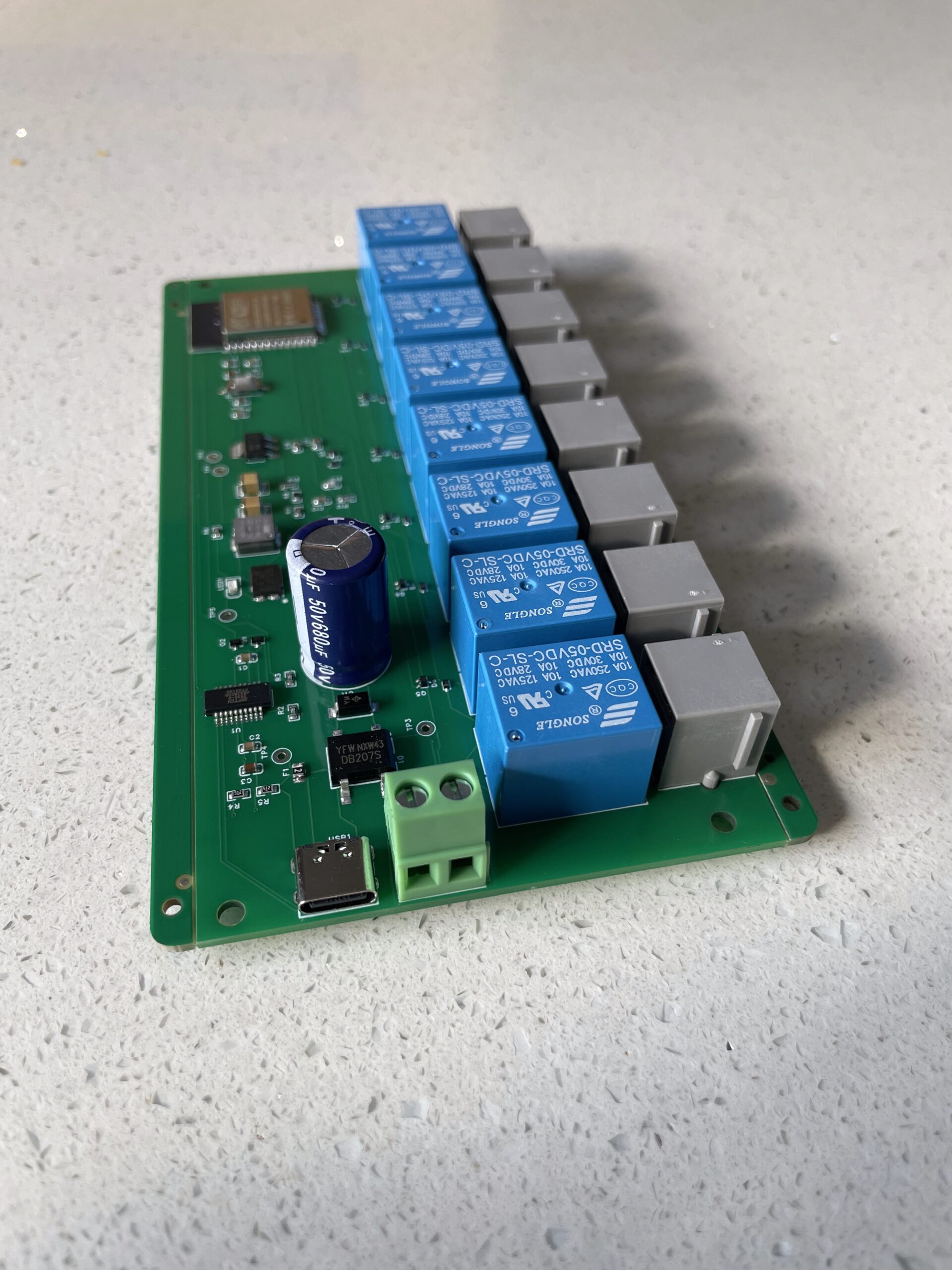
If you have been looking for a way to bring your ducted AC zoning into Home Assistant without relying on cloud services, apps you do not control, or proprietary ecosystems, our ESPHome 24V AC HVAC Zone Controller might be exactly what you need.
But it is not for every setup.
This article will help you work out whether it is a good fit for your system, and what you should check before buying.
What this controller is designed for
This controller is built for 24V AC HVAC zone control systems.
In plain English, that means it is intended to replace the existing zone control board that opens and closes dampers in a ducted air conditioning system. It is especially suited to people who want:
- Home Assistant integration
- local control
- no cloud dependency
- an ESPHome-based solution
- a more open alternative to proprietary zone controllers
It is designed as a replacement for systems where the existing zone controller is already handling 24V AC dampers.
When this controller is likely a good fit
This controller may be right for you if:
You already have a zoned ducted AC system
If your home has multiple zones that can be opened or closed independently, that is a good start.
Your existing zone controller uses 24V AC
This is the big one. If your current setup distributes 24V AC to zone dampers, compatibility is much more likely.
You want Home Assistant control
If you want to bring zone control into Home Assistant and keep everything local, this controller was built with that in mind.
You are replacing the zoning board, not the whole AC system
This product is focused on zone control, not replacing the entire air conditioner control logic.
You are comfortable checking wiring or having an installer check it
Even when a system is compatible, it is always best to confirm wiring before swapping anything over.
When this controller may not be right for you
This controller may not be suitable if:
Your existing system is proprietary
Some brands use custom communication methods, smart panels, or proprietary modules rather than simple 24V AC switching.
Your dampers are not standard 24V AC dampers
Not all zoning systems work the same way. Some use different voltages, communication buses, or unusual control methods.
You want a universal plug-and-play solution for every system
This is not a one-size-fits-all magic box. It is a strong solution for the right type of system, but compatibility still matters.
Your existing system tightly integrates AC unit control, sensors, and zoning into one closed ecosystem
If the zone controller is deeply tied into the brand’s own logic, extra investigation will be needed.
The key compatibility question
The most important question is this:
Is your current zone controller switching standard 24V AC outputs to your dampers?
If the answer is yes, then there is a strong chance this controller could work well for your setup.
If the answer is no, or you are not sure, more investigation is needed before making the call.
Systems that may be compatible
In general, this controller is best suited to systems where:
- the dampers are 24V AC
- the existing zone board opens and closes zones using straightforward switched outputs
- the zoning hardware is separate from the main AC unit logic
- the current controller is acting as a standard zoning board rather than a proprietary smart ecosystem hub
Systems that need extra checking
Some systems may still be possible, but need more investigation first. These include:
- iZone systems
- proprietary smart zoning systems
- systems with digital communication between modules
- systems with unusual damper wiring
- retrofits where the existing board does more than simple zone switching
That does not automatically mean it will not work. It just means you should not assume it is plug and play.
How to check if your system is compatible
The easiest way to get a feel for compatibility is to inspect your current zone controller.
Things to look for:
- model number of the existing controller
- labels showing 24V AC
- zone output labels
- damper model numbers
- wiring terminals
- how many wires go to each damper
- any labels like open, close, common, R, C, or 24VAC
Photos help a lot here.
A clear photo of the control board and its wiring is often enough to quickly tell whether the system looks like a likely match.
Good signs
These are usually encouraging signs:
- your existing board clearly shows 24V AC
- each zone has simple damper wiring
- the dampers look like standard open/close dampers
- the current system is using a traditional zone board rather than a touch-panel-driven ecosystem
- the wiring is straightforward and clearly labelled
Warning signs
These are signs to slow down and investigate further:
- the system uses branded smart modules everywhere
- there are network-style cables or communication buses instead of simple control wiring
- the zone board has little or no obvious 24V AC labelling
- the current system seems deeply tied to a custom wall controller
- there is limited documentation on how the dampers are driven
Who this product is ideal for
This controller is a great fit for:
- Home Assistant users
- ESPHome users
- people wanting local control
- users replacing older 24V AC zone boards
- people trying to move away from cloud or proprietary systems
- DIYers and installers comfortable verifying wiring
Who should ask questions first
You should definitely check first if:
- you use iZone
- you are unsure what voltage your dampers use
- your current setup is heavily branded and closed
- you do not know whether your zoning is standard 24V AC
- you want to keep existing proprietary panels fully functional
Best next step if you are unsure
If you are not sure whether your system is compatible, the best thing to do is send through:
- a photo of your existing control board
- the model number
- photos of the wiring
- any visible damper model numbers
From there, it is usually possible to work out whether your setup looks like:
- a likely direct replacement
- a possible retrofit with some extra work
- or a system that is too proprietary for a simple swap
Final thoughts
This ESPHome HVAC Zone Controller is a strong option for the right type of system.
If you already have a 24V AC zoned ducted system and want a local, Home Assistant-friendly, no-cloud solution, it could be exactly what you have been looking for.
But the golden rule is simple:
Check the wiring first.
That one step can save a lot of guesswork and quickly tell you whether this controller is the right fit.
If you are unsure, send us a few photos of your existing setup and we can help point you in the right direction.